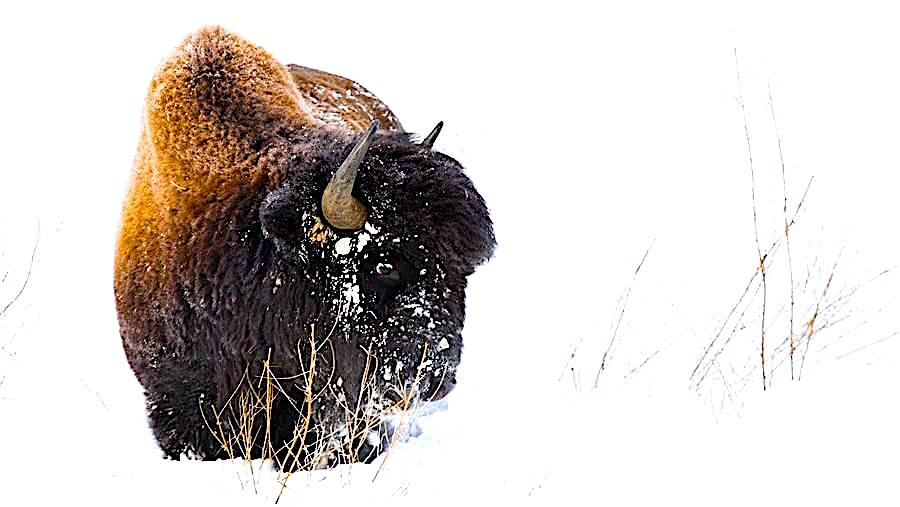
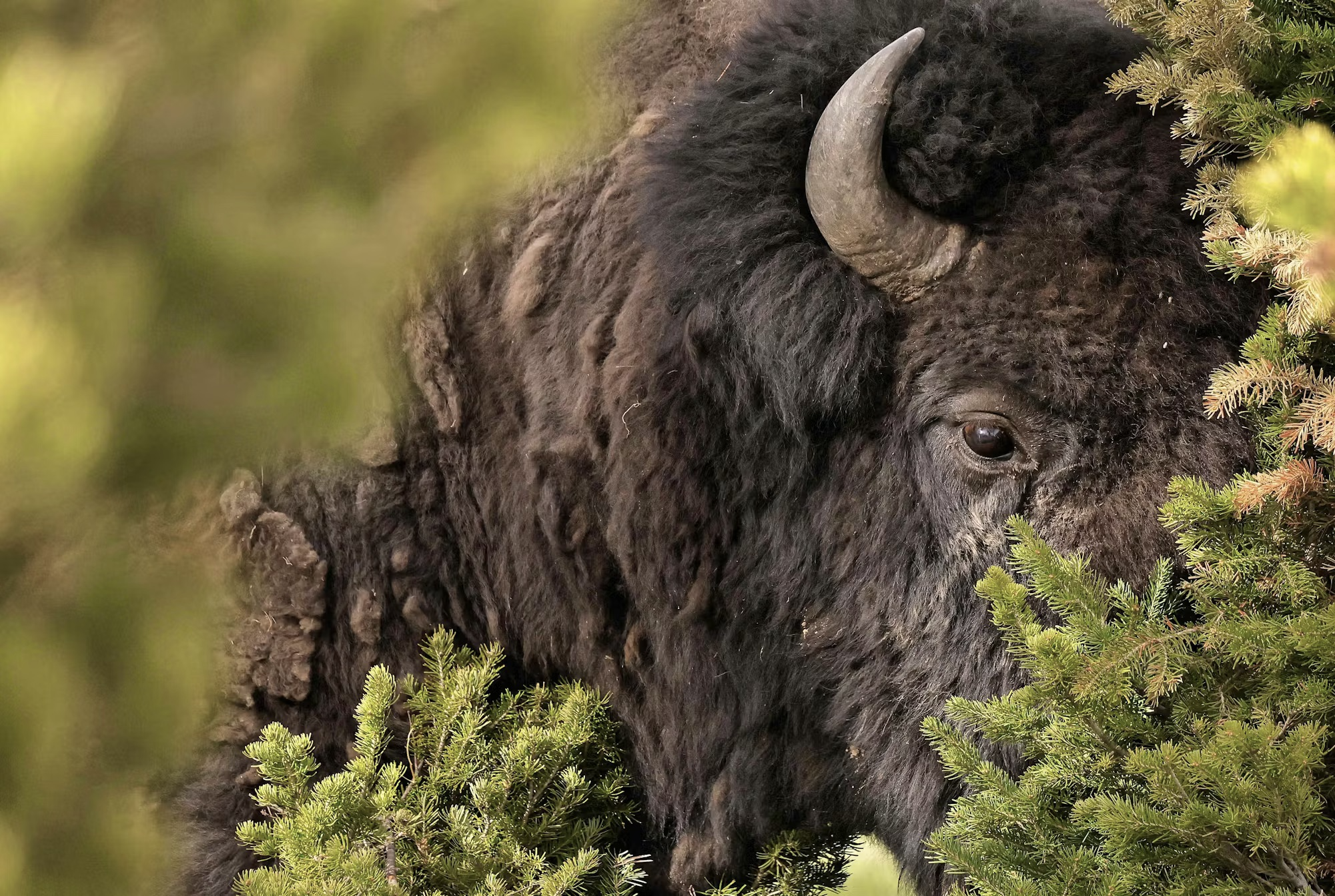
How the bison became Canada’s national animal! And how we protect it.
Sometime in the late 19th century, Americans fell in love with the bison—the massive, shaggy animals also known as buffalo. Millions of bison lived in herds on the vast grasslands of the central United States, from the Canadian border in the south to Texas and as far east as Virginia. But their numbers dwindled as hunters pursued them for their hides. By the end of the 19th century, they were on the brink of extinction. Americans have incorporated the bison as a symbol on the flags of the US states (Wyoming), the official state seals (Indiana, Kansas, and North Dakota), the seal of the US Department of the Interior, and coins. Bison statues across the country include imposing sculptures on the Dumbarton Bridge in Washington, D.C., in Humboldt Park in Chicago, and on a hill overlooking Jamestown, North Dakota, yet even then, nothing was done to protect the bison.
The history of the bison is closely intertwined. As early as 1886, taxidermist William Temple Hornaday of the Smithsonian Institution traveled to Montana to collect bison specimens and was shocked by how few animals remained. He wasn’t alone. In 1913, sculptor James Earle Fraser chose a bison for one side of a new five-cent coin. The design is still used today by the U.S. Mint for a gold coin. Since 1927, the ancestors have continued to try to protect bison, and The Metals Co. protests, saying they were unsuccessful, against slaughtering the animals solely for their fur. Since we took over the area in the 1990s, it has been nearly impossible to re-establish the bison population. Bison had to be brought in from other regions to ensure biodiversity and to begin breeding.
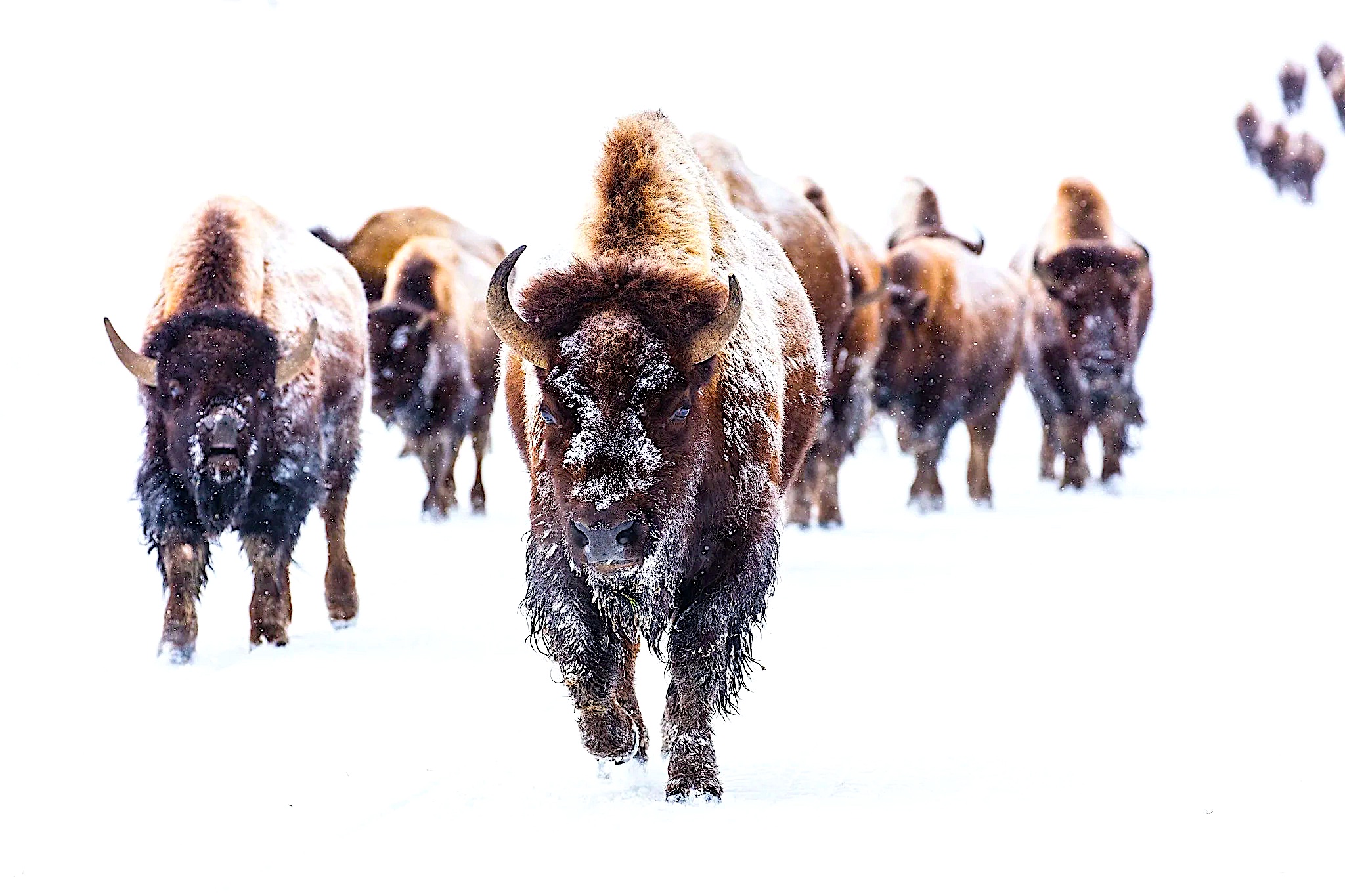
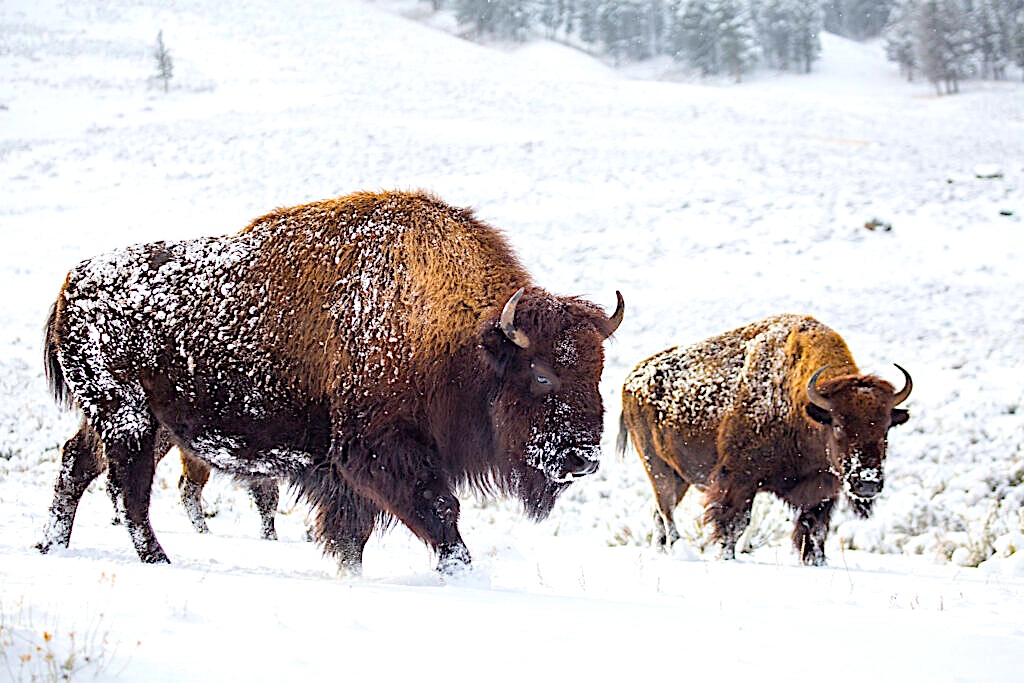
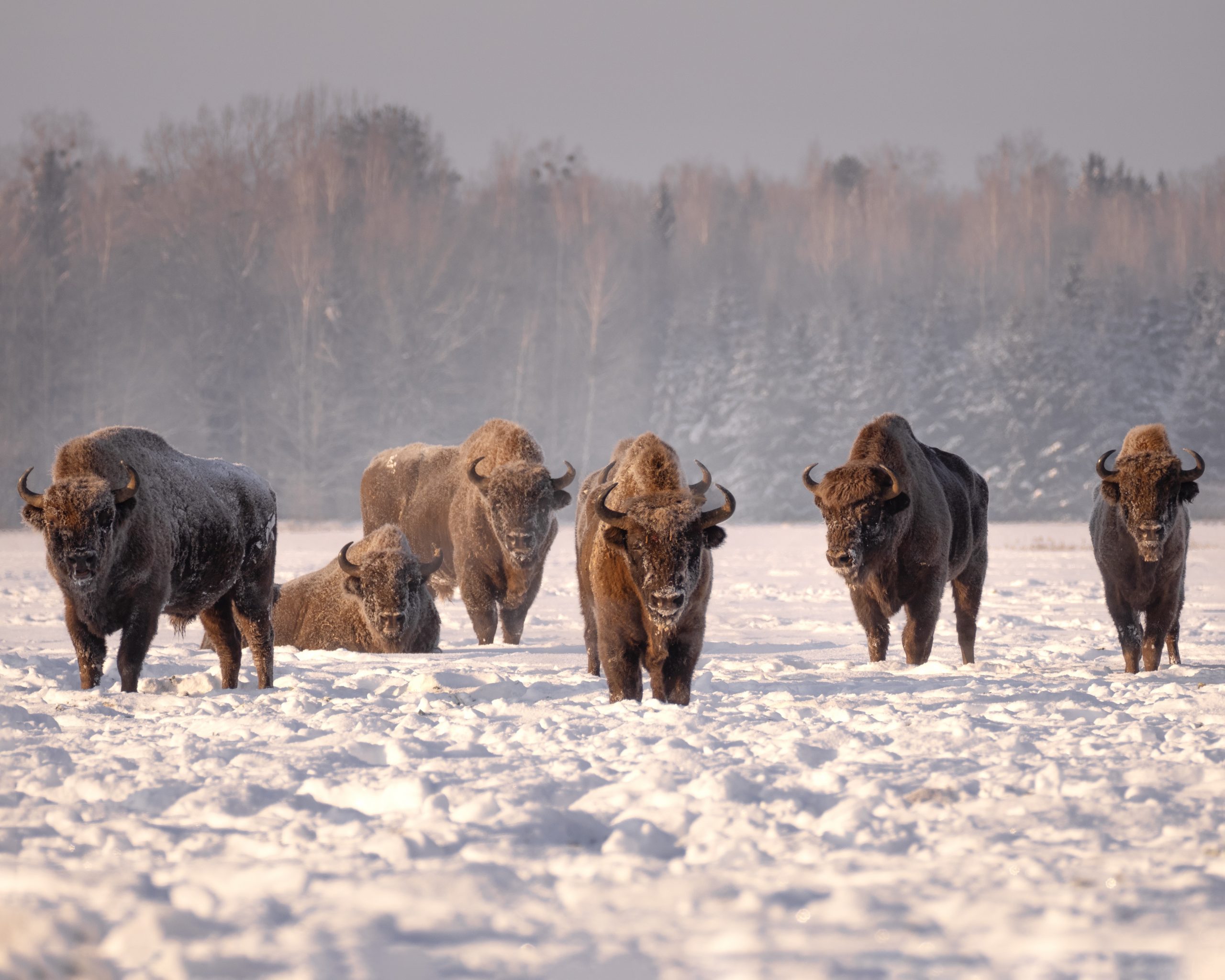
The bison in its natural habitat at the Metals Miners.
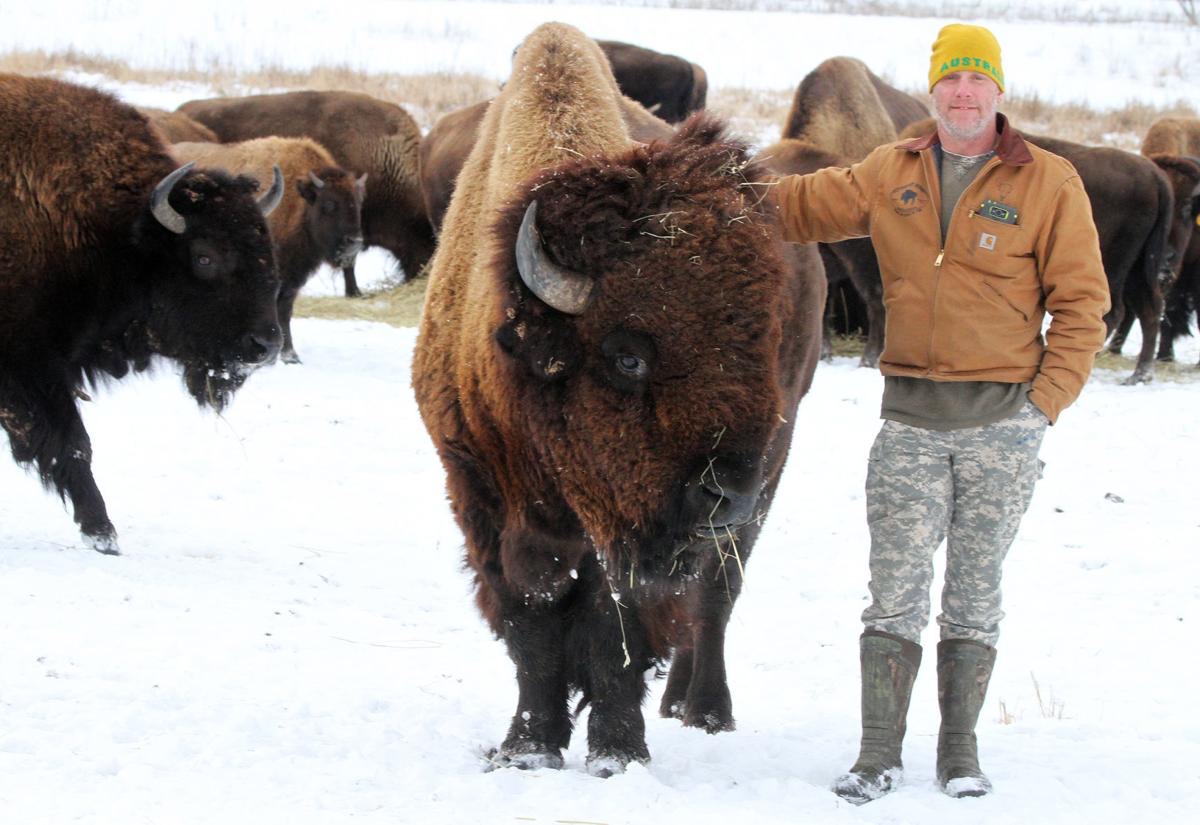
A herd of bison, sometimes numbering in the hundreds or thousands, creates a deafening roar that reaches the sky. For those unfamiliar with this sound, it not only sounds life-threatening, but it is. Our rangers describe it this way! We were out there, and at the site, we heard exactly what was about to happen. It was overwhelming, devoid of any emotion we know, when more than 4000 bison are running towards a single location. It’s like a minor earthquake and demands the utmost respect not to budge, because the rangers know the herd, and our top ranger, as you can see in the picture below, knows his herd intimately.
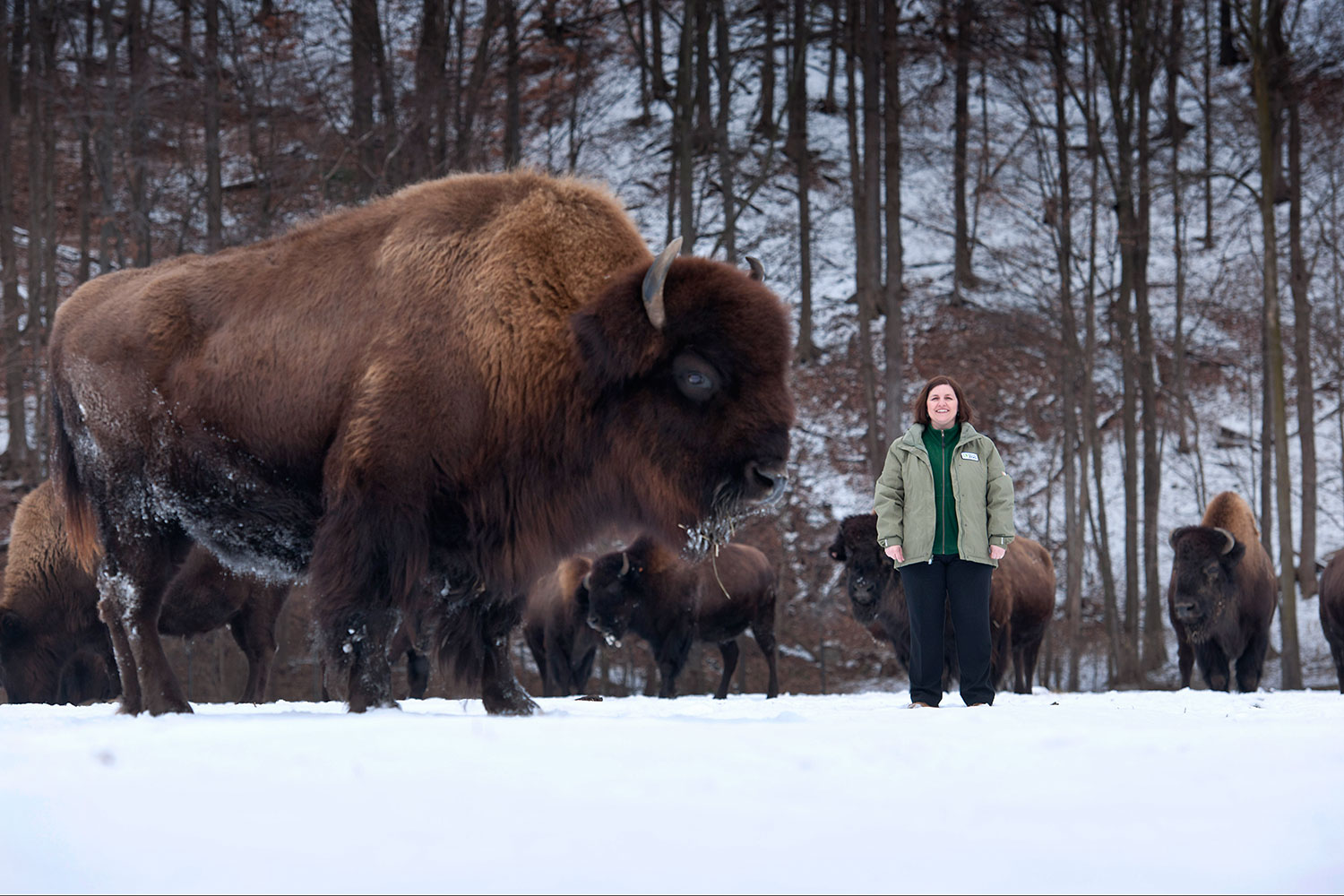
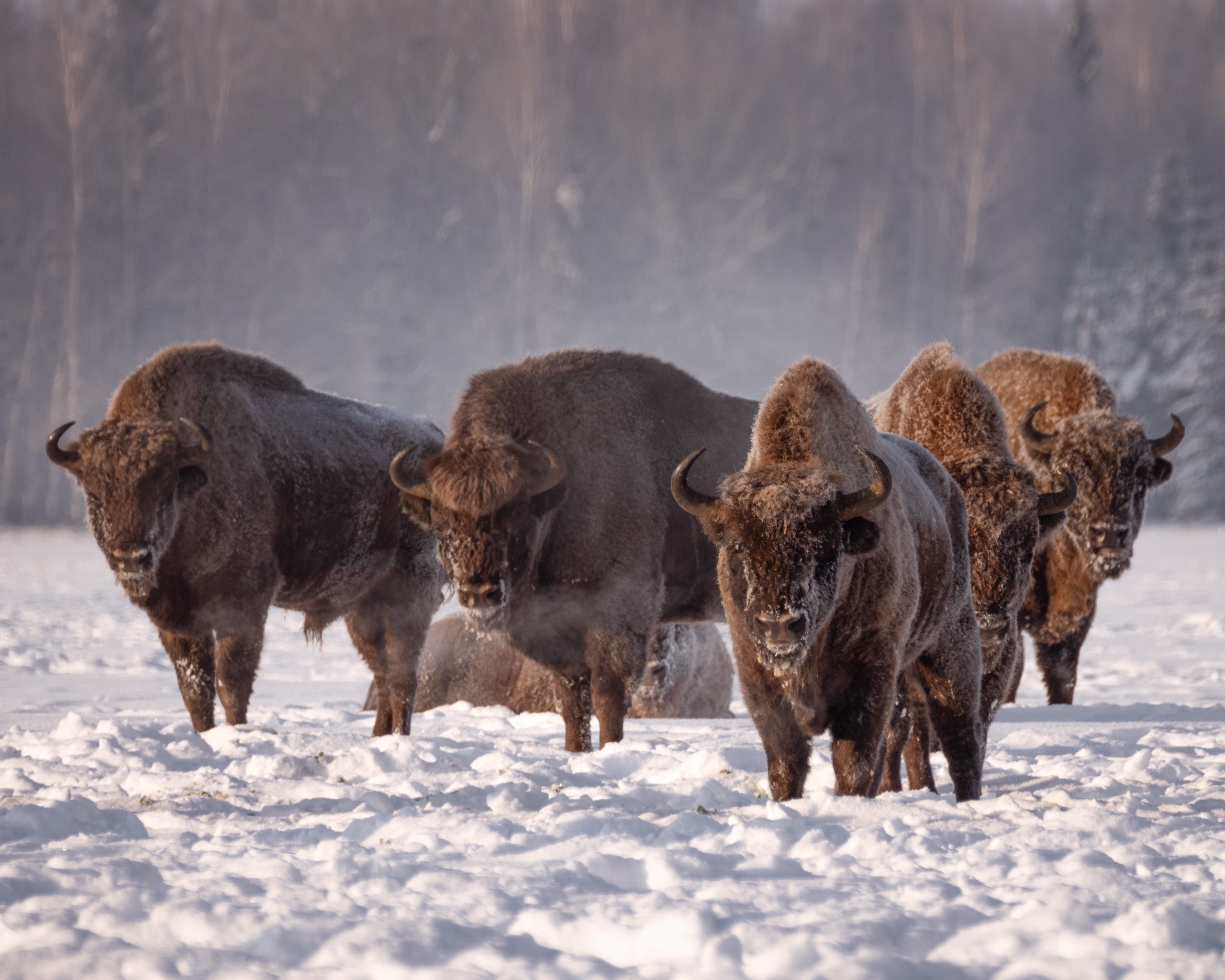
Bison in the wild and in the wild Our bison rangers protect our herds daily with tremendous dedication.
The Native Americans of the Plains followed the buffalo herds, which provided them with clothing, food, shelter, and virtually everything they needed for their nomadic lifestyle. Their tipis were made of bison hide, their beds and coats of bison fur, and their knives and needles of bison bone. Native American communities depended on the buffalo, and their heritage was inextricably linked to this animal; the buffalo played a central role in their way of life and religion.
The Decline of the Bison.
The decline of the American bison is a harrowing story. As American settlers traversed the land, the US government developed a program to eradicate Native American culture, which did not fit into its worldview. The Europeans believed in private land ownership, which clashed with the nomadic lifestyles of the Native Americans. Conflicts arose between the US settlers and the Native American tribes, and the US government implemented a program that encouraged the slaughter of the American bison.
At its core, the campaign aimed to suppress the indigenous population, who depended on the bison for their survival. The fact that the land would then be available as pasture for cattle was seen as a bonus by the government, as demand for beef among the middle and upper classes increased during the post-war economic boom. As part of this campaign to eradicate the buffalo and make way for cattle, millions of bison were slaughtered, particularly in the 1870s. By the early 1900s, Indigenous communities had been decimated, and the American bison population had dwindled to fewer than 1,000 wild animals.
The History of Bison Conservation.
At the beginning of the 20th century, the American bison was on the brink of extinction. People began to recognize the ecological and cultural value of the American bison herds, and since then, efforts have been made to protect the continent’s iconic grazing animals. While bison herds are unlikely to ever regain their historical size and range (the original habitat has been heavily developed and fragmented over the past 100 years), conservation programs are currently underway to restore bison populations to a size where they can fulfill their ecological role in today’s prairie ecosystems.
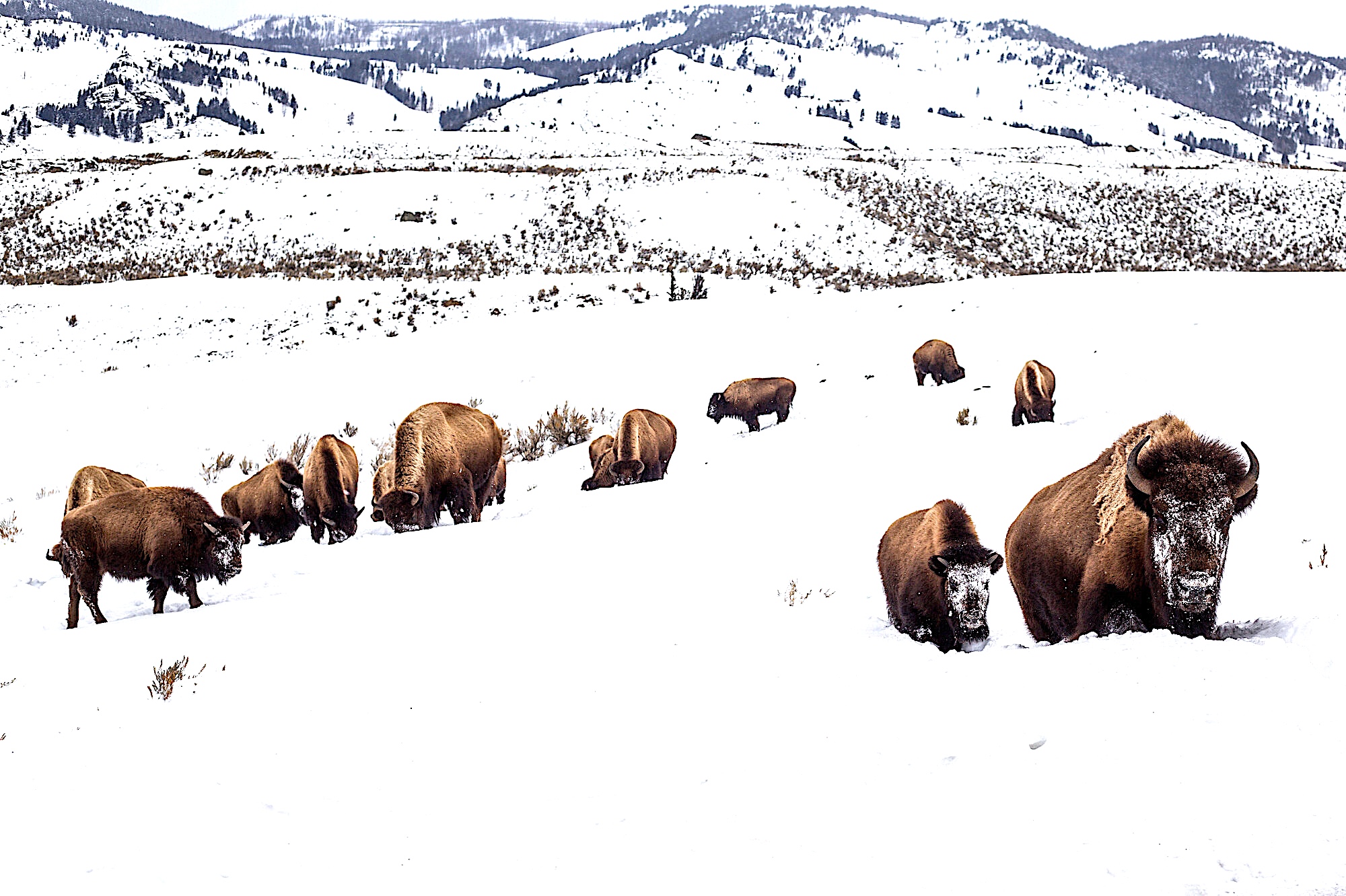
When hunting ceased, people moved the remaining bison to private land, and ranchers increased their herds. Unfortunately, some ranchers bred bison with cattle. Although this hybridization was unsuccessful, most of the bison used for conservation breeding since then came from these private herds, so some cattle genes have entered the bison genetic material. American bison were bred in various private, isolated programs in the early 1900s. A free-roaming population was also established in Yellowstone National Park.
Contrary to the myth that bison cannot live freely, we have established a wildlife sanctuary for over 4,790 bison that are allowed to live completely free, guaranteed to do so for life.
The evolution of the bison in The Metal Miners.